
Top 6 Metronome Alternatives in 2026

April 10, 2026

If you are looking to move away from Metronome, the friction tends to show up in specific ways. Implementation is heavily developer-dependent. Every pricing change, every new billing model, every adjustment to how usage gets rated requires engineering time. For a platform that is supposed to make billing easier, the ongoing maintenance burden can feel like it contradicts the premise.

The second pain point is deeper. Metronome is a billing platform. It tells you what customers owe you. It does not tell you what it costs to serve them. For traditional SaaS products with predictable margins, that is manageable. For AI products where infrastructure costs shift with every model upgrade, every context window expansion, and every new agentic workflow, operating without cost visibility is genuinely risky. You can be growing revenue and eroding margin at the same time, with nothing in your billing stack to flag it.

The third issue is pricing model flexibility. Metronome handles usage-based billing well within certain parameters. But outcome-based pricing, multi-dimensional billing across models and modalities, credit drawdown systems, real-time spend guardrails: these are not edge cases for AI companies. They are increasingly the default. And Metronome was not built with that range in mind.

Here are six alternatives worth evaluating seriously.


1. Amberflo

Amberflo
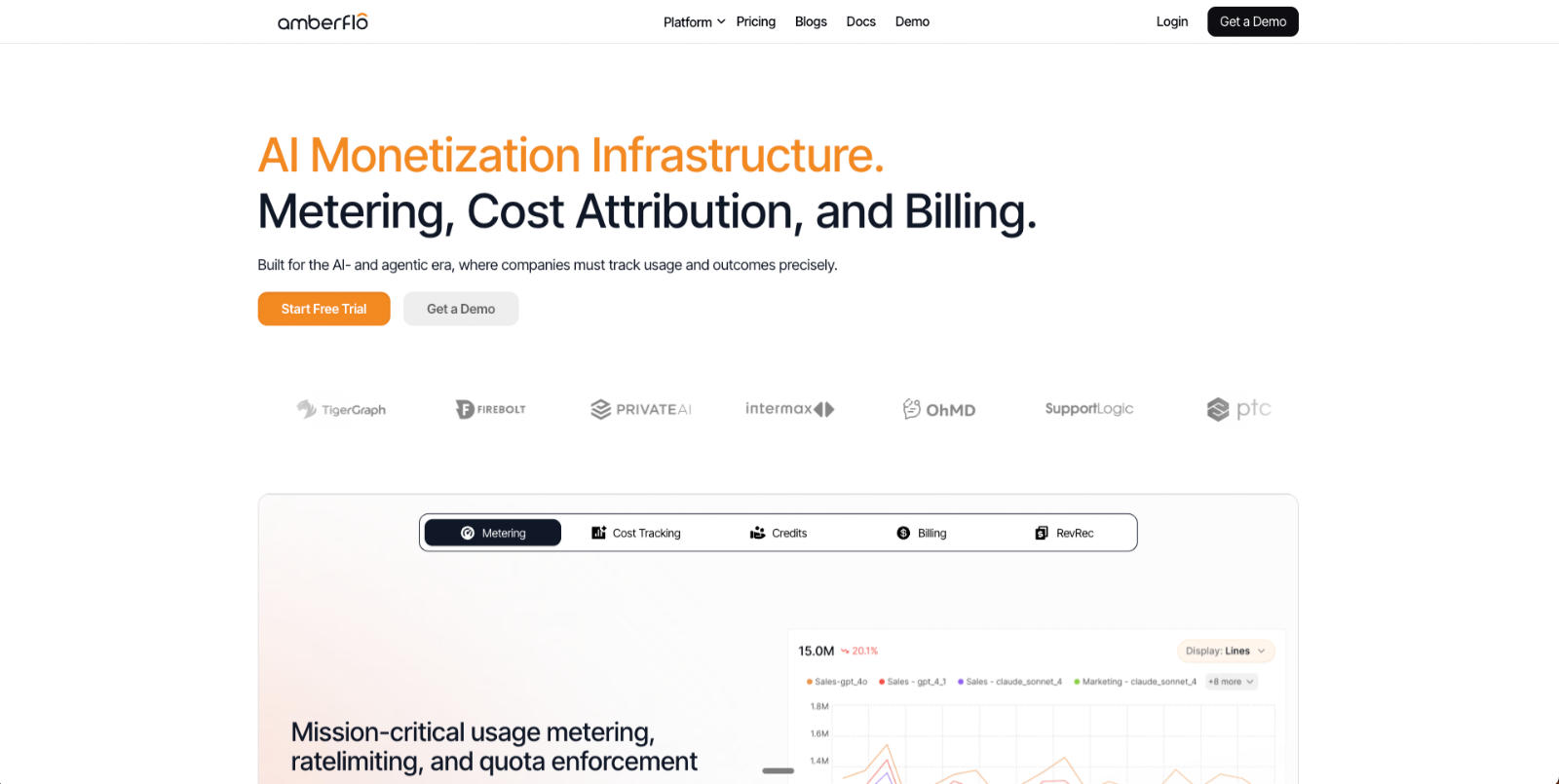
is an AI monetization platform, purpose-built for the AI era.It is the first billing platform of its kind that also integrates underlying cost tracking per customer for margin analysis. . Where Metronome handles billing in isolation, Amberflo connects usage to cost to billing in one integrated platform . You get real-time metering at financial-grade accuracy, margin visibility per customer, and support for the full range of traditional and AI-native pricing models: usage-based, tiered, credit-based, outcome-based, hybrid, and multi-dimensional. Spend can be attributed across models and vendors, so you always know where cost is concentrating. 

2. Orb
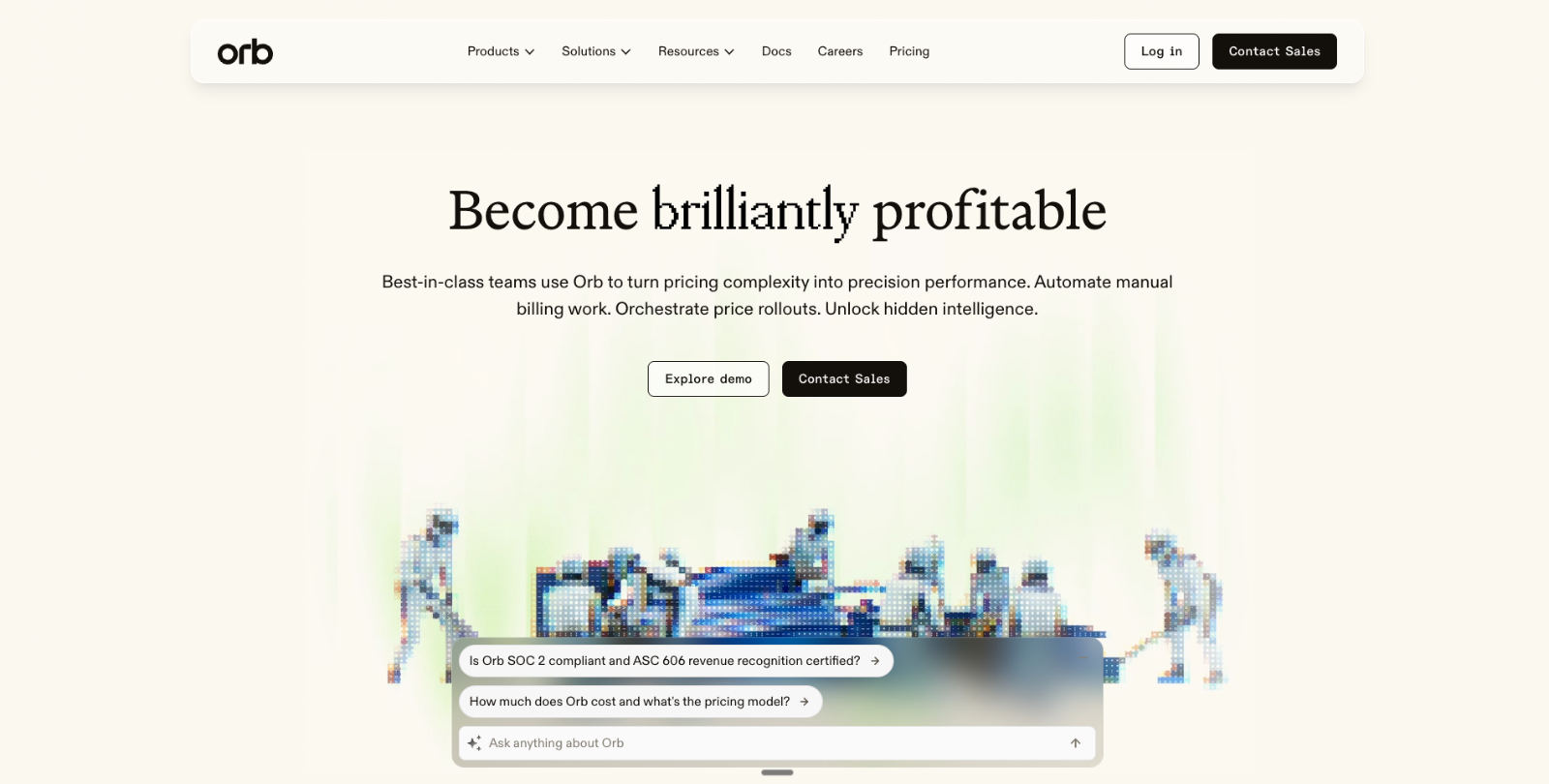

Orb is a usage-based billing platform with solid metering capabilities and billing cycle management. It is a common consideration when moving away from Metronome, particularly for teams that want a cleaner developer experience with less implementation overhead. The limitation is familiar: Orb sits on the billing side and does not address cost. It also has constraints around pricing flexibility for AI-native models, making it a partial solution for companies with more complex or evolving billing requirements.

3. Chargebee
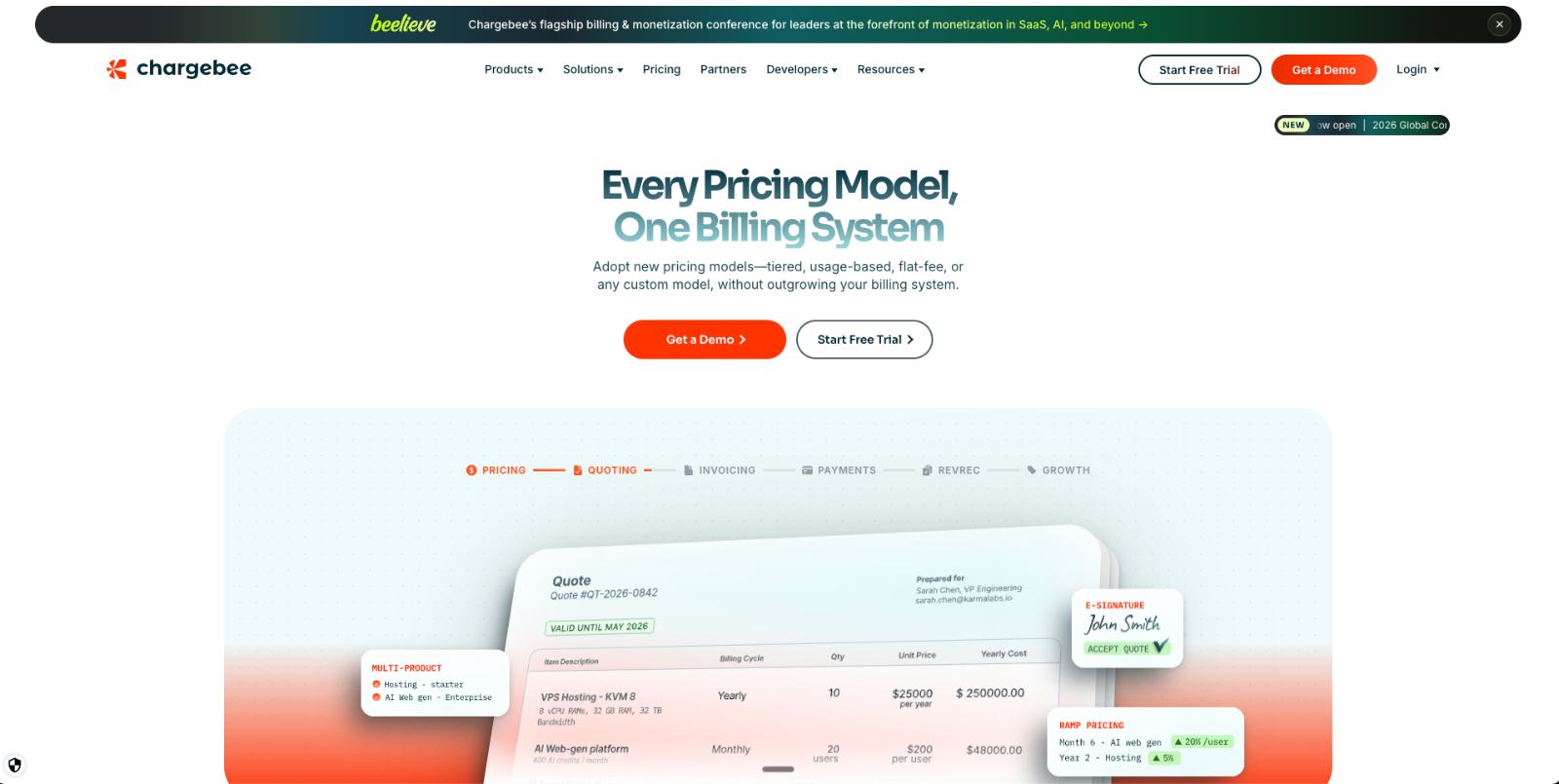


Chargebee is a subscription billing platform with renewal workflows and revenue recognition. For products with predominantly subscription-based revenue, it is a capable option. The limitation for AI companies is structural: Chargebee was built for subscription models, and adapting it for high-volume usage metering or dynamic consumption pricing requires significant custom work. AI cost management is not in scope.

4. Zuora



Zuora is an enterprise-grade billing platform with deep capabilities for complex subscription and hybrid revenue models. It is built for organizations with significant billing complexity, dedicated RevOps infrastructure, and longer implementation timelines. For large enterprises with established finance operations, it can be the right fit. For most AI-native companies at growth stage, the implementation effort, pricing, and pace of deployment tend to be misaligned with how fast AI products need to move.

5. m3ter
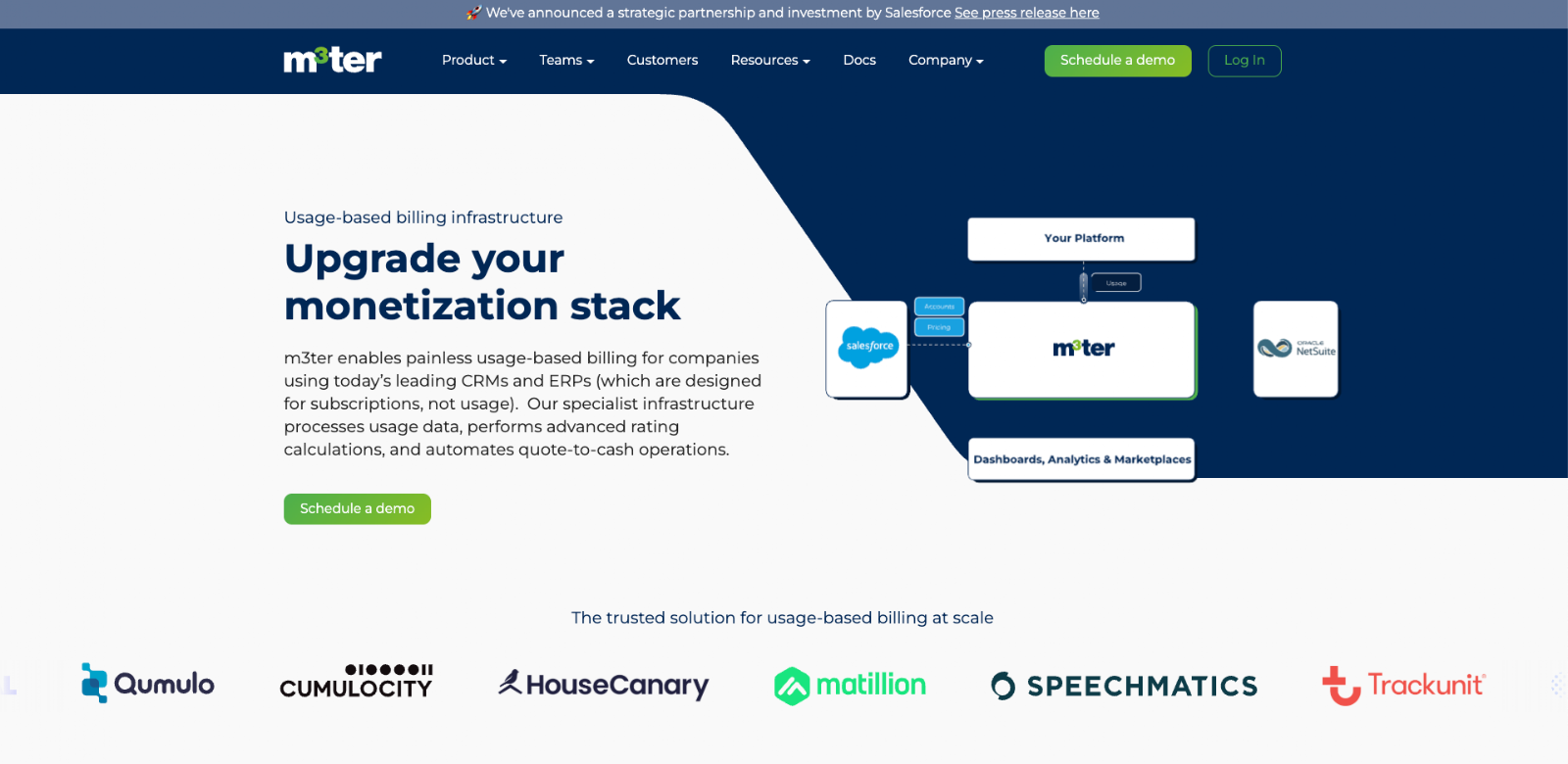
m3ter is a usage-based billing platform focused on scalability and metering accuracy. It is designed for companies that need to handle high volumes of usage data reliably and is a reasonable option for infrastructure and developer tooling products. Like most billing-focused platforms, it does not address the cost side of the equation. Understanding margin per customer requires additional tooling outside m3ter.

6.  Lago
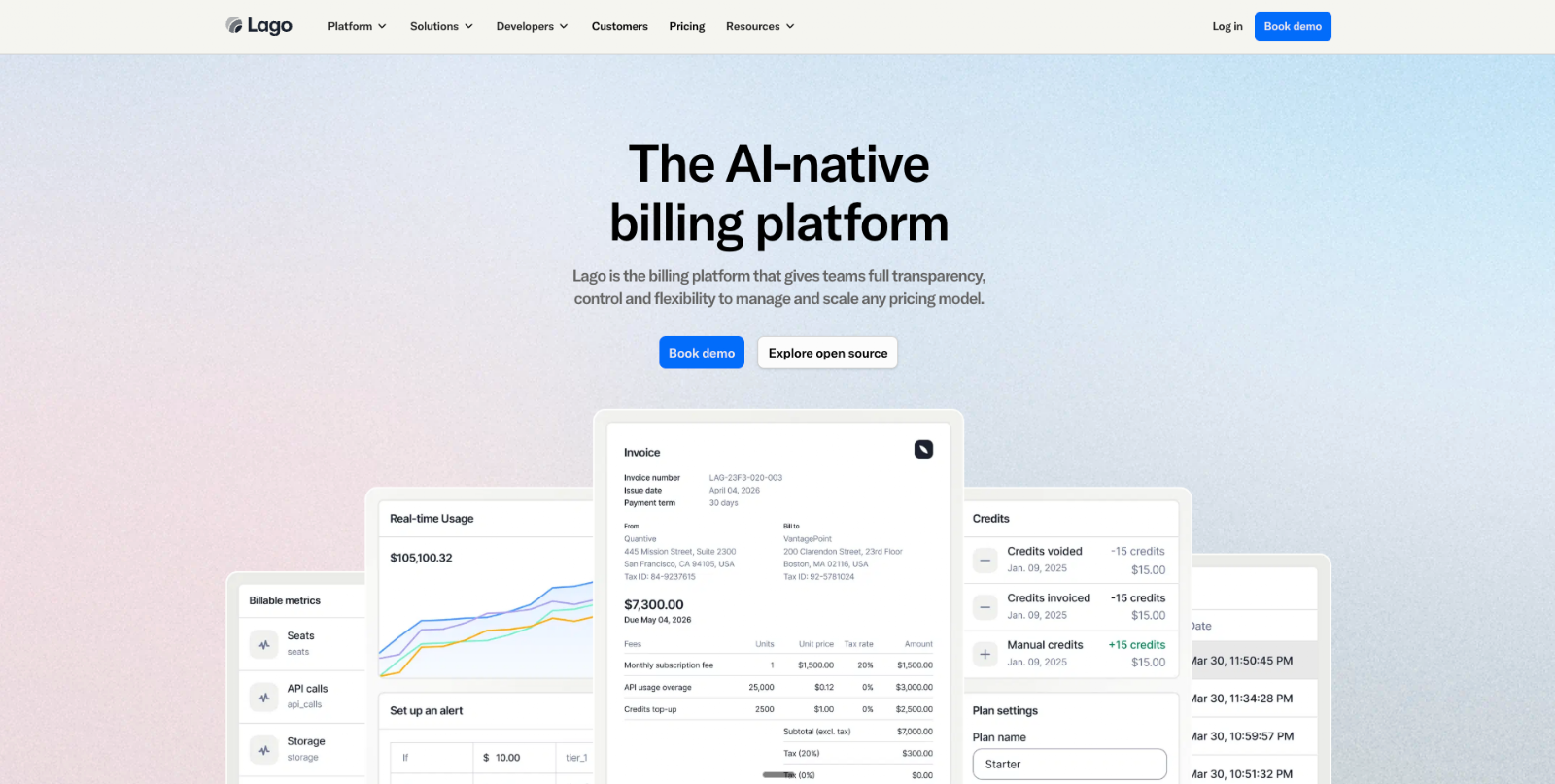

Lago is an open-source billing platform that gives engineering teams full control over their billing infrastructure. For companies that want to build and own their billing stack rather than buy it, Lago is a credible starting point. That said, open-source means you are responsible for implementation, hosting, and ongoing maintenance. If your team is already stretched managing product infrastructure, adding billing infrastructure to that list is a real cost. And like most tools in this space, Lago focuses on the billing side. Cost tracking and margin visibility require separate solutions.

Which Metronome Alternative Is Right for You?

The decision usually comes down to what broke first. If your engineering team is spending too much time on billing logic, the priority is a platform that lets product and finance teams make pricing changes without opening a ticket. If your pricing model has outgrown simple consumption billing and you need credits, outcomes, or multi-dimensional structures, look closely at how much of that each platform supports natively versus through custom configuration. If you are running an AI product and your margins are unclear, the most important question to ask any vendor is simple: can I see what each customer costs me, not just what they pay me? Most platforms cannot answer yes to that. The ones that can are worth prioritizing.

Top 6 Metronome Alternatives in 2026

April 10, 2026

If you are looking to move away from Metronome, the friction tends to show up in specific ways. Implementation is heavily developer-dependent. Every pricing change, every new billing model, every adjustment to how usage gets rated requires engineering time. For a platform that is supposed to make billing easier, the ongoing maintenance burden can feel like it contradicts the premise.

The second pain point is deeper. Metronome is a billing platform. It tells you what customers owe you. It does not tell you what it costs to serve them. For traditional SaaS products with predictable margins, that is manageable. For AI products where infrastructure costs shift with every model upgrade, every context window expansion, and every new agentic workflow, operating without cost visibility is genuinely risky. You can be growing revenue and eroding margin at the same time, with nothing in your billing stack to flag it.

The third issue is pricing model flexibility. Metronome handles usage-based billing well within certain parameters. But outcome-based pricing, multi-dimensional billing across models and modalities, credit drawdown systems, real-time spend guardrails: these are not edge cases for AI companies. They are increasingly the default. And Metronome was not built with that range in mind.

Here are six alternatives worth evaluating seriously.


1. Amberflo


Amberflo
is an AI monetization platform, purpose-built for the AI era.It is the first billing platform of its kind that also integrates underlying cost tracking per customer for margin analysis. . Where Metronome handles billing in isolation, Amberflo connects usage to cost to billing in one integrated platform . You get real-time metering at financial-grade accuracy, margin visibility per customer, and support for the full range of traditional and AI-native pricing models: usage-based, tiered, credit-based, outcome-based, hybrid, and multi-dimensional. Spend can be attributed across models and vendors, so you always know where cost is concentrating. 

2. Orb


Orb is a usage-based billing platform with solid metering capabilities and billing cycle management. It is a common consideration when moving away from Metronome, particularly for teams that want a cleaner developer experience with less implementation overhead. The limitation is familiar: Orb sits on the billing side and does not address cost. It also has constraints around pricing flexibility for AI-native models, making it a partial solution for companies with more complex or evolving billing requirements.

3. Chargebee


Chargebee is a subscription billing platform with renewal workflows and revenue recognition. For products with predominantly subscription-based revenue, it is a capable option. The limitation for AI companies is structural: Chargebee was built for subscription models, and adapting it for high-volume usage metering or dynamic consumption pricing requires significant custom work. AI cost management is not in scope.

4. Zuora


Zuora is an enterprise-grade billing platform with deep capabilities for complex subscription and hybrid revenue models. It is built for organizations with significant billing complexity, dedicated RevOps infrastructure, and longer implementation timelines. For large enterprises with established finance operations, it can be the right fit. For most AI-native companies at growth stage, the implementation effort, pricing, and pace of deployment tend to be misaligned with how fast AI products need to move.

5. m3ter

m3ter is a usage-based billing platform focused on scalability and metering accuracy. It is designed for companies that need to handle high volumes of usage data reliably and is a reasonable option for infrastructure and developer tooling products. Like most billing-focused platforms, it does not address the cost side of the equation. Understanding margin per customer requires additional tooling outside m3ter.

6.  Lago


Lago is an open-source billing platform that gives engineering teams full control over their billing infrastructure. For companies that want to build and own their billing stack rather than buy it, Lago is a credible starting point. That said, open-source means you are responsible for implementation, hosting, and ongoing maintenance. If your team is already stretched managing product infrastructure, adding billing infrastructure to that list is a real cost. And like most tools in this space, Lago focuses on the billing side. Cost tracking and margin visibility require separate solutions.

Which Metronome Alternative Is Right for You?

The decision usually comes down to what broke first. If your engineering team is spending too much time on billing logic, the priority is a platform that lets product and finance teams make pricing changes without opening a ticket. If your pricing model has outgrown simple consumption billing and you need credits, outcomes, or multi-dimensional structures, look closely at how much of that each platform supports natively versus through custom configuration. If you are running an AI product and your margins are unclear, the most important question to ask any vendor is simple: can I see what each customer costs me, not just what they pay me? Most platforms cannot answer yes to that. The ones that can are worth prioritizing.

Subscribe to our Newsletter

AI Optimization and Monetization
Oops! Something went wrong while submitting the form.